Woods, Water & Fish

with No Comments

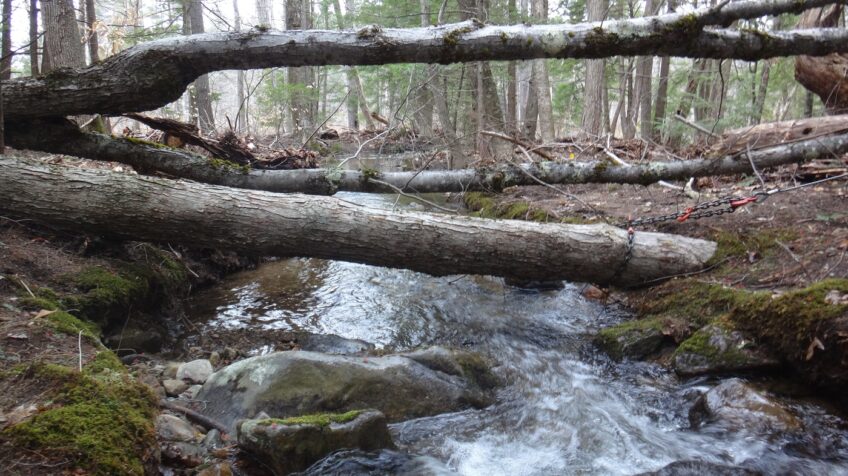
This summer PLC and the NH Fish and Game Department will be working to improve fish habitat in Scataquog Brook at our Proctor Preserve in Lyndeborough. The stream restoration project will involve felling a small number of trees away from the stream, and then carefully and strategically placing them, either whole or cut into specific lengths, into the stream. The practice has been used for about twenty years in New Hampshire, first in the White Mountain National Forest.
Rocky Roads

with No Comments

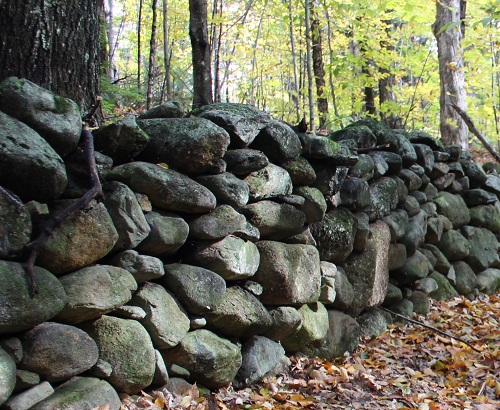
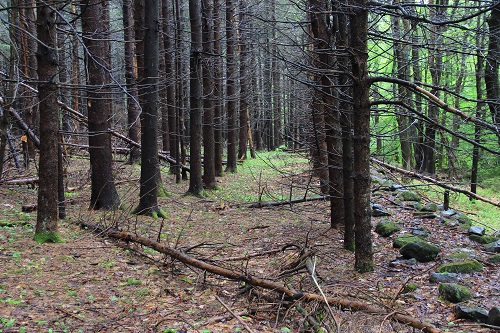
One of my favorite woods walks is the Chestnut Hill section of the Joe English Reservation in Amherst. A unique feature of the area are the piles of stones that are scattered randomly across the hillside. These piles are identical to the cairns one sees above tree line in the White Mountains. But where did these piles of stones come from, and why are they in the middle of the forest?

The Story Behind the Red Pines

with No Comments


In his book Reading the Forested Landscape, ecologist Tom Wessels writes that if you find a stand of red pines in New England that is not in its natural setting (dry, rocky slopes), then the trees were almost surely planted.  Take the red pines at PLC’s Jon Brooks conservation easement in New Boston.    If you walk northwest along the trail that runs through the property, at the top of the hill you’ll find numerous red pines on your right, but no red pines on your left. 

Club mosses: the other evergreens!

with No Comments

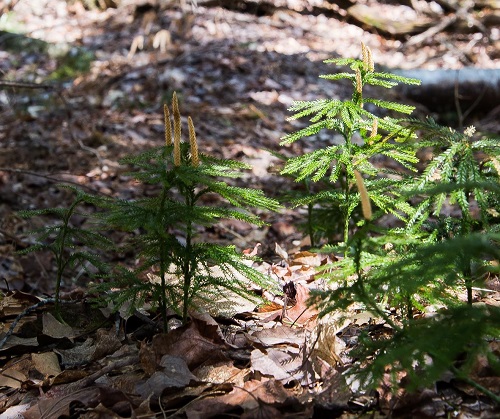
If you walk in the woods in early spring you may see little green ‘trees’ breaking through the leaf litter and receding snow.  Some are branched, their fan-like branches even resembling little pagodas, while others are unbranched, erect and spiky. These little trees are the other evergreens:  mosses, ferns and clubmosses. As the snow melts away, and before the first leaves of Canada Mayflower, our earliest wildflower, are up extensive colonies of evergreen clubmosses will stand out in the forest.